
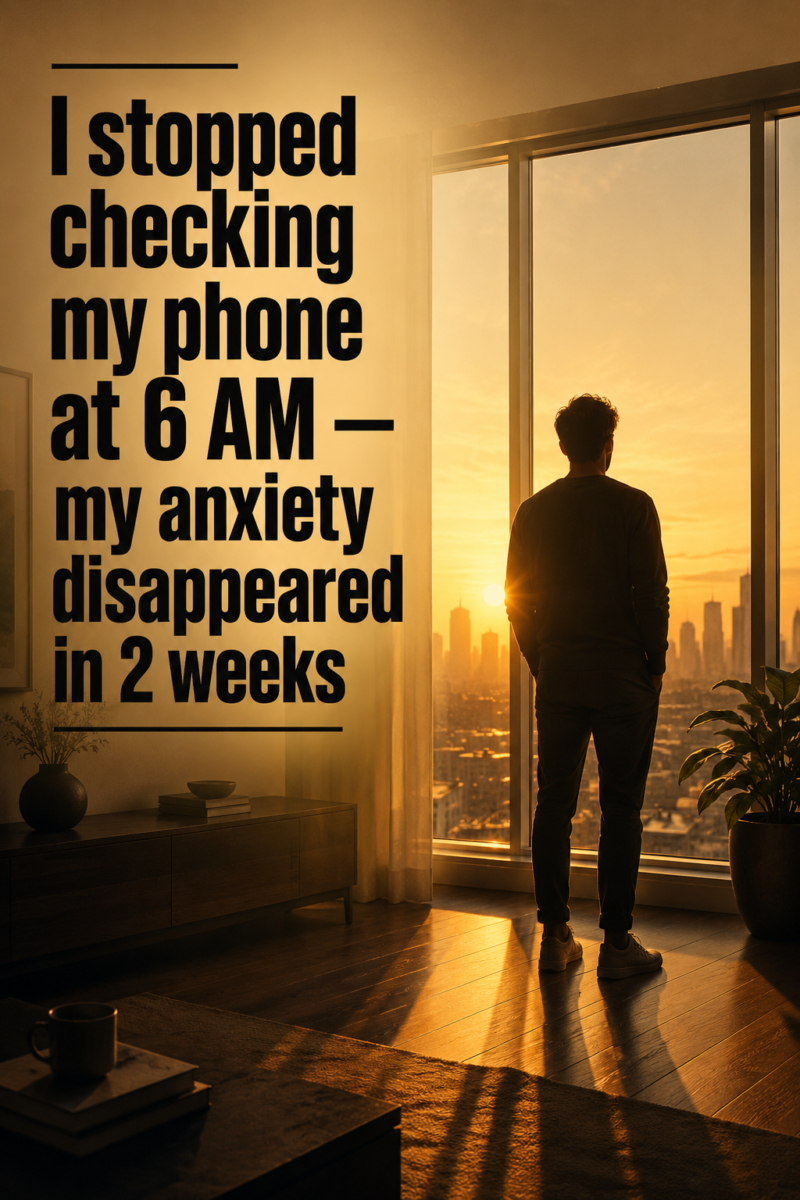
For a long time, my mornings looked like this: alarm goes off, I grab my phone before my eyes are even fully open.
The Phone Thing Is Real, and Here’s Why
I know you’ve heard “don’t check your phone in the morning” approximately a thousand times. But I want to be specific about why it actually matters, because understanding the reason is what finally made me stick with it.
When you wake up, your brain is in a naturally groggy, lowerguard state. Scrolling into social media or the news right then is like handing your nervous system a firehose of information before it’s had time to warm up. Your cortisol is already naturally elevated in the morning it’s a biological process called the cortisol awakening response and piling on digital stimulation on top of that is basically adding fuel to a fire that’s already lit.
I started leaving my phone on the kitchen counter overnight so it was physically out of reach. The first three days felt strange I kept reaching for something that wasn’t there. By day five, I noticed I was brushing my teeth without my heart already racing. I replaced the phone with a cheap Casio alarm clock I bought for about twelve dollars, so I had no reason to keep my phone in the bedroom at all. Small, unsexy change. Genuinely big difference.
Water Before Coffee More Important Than It Sounds
I used to reach for coffee the second I got to the kitchen. Caffeine on an empty, dehydrated stomach can actually spike anxiety, especially if you’re already prone to it. It triggers a cortisol release and can cause that jittery, slightly heart racing feeling that’s annoyingly similar to an anxious episode. I kept blaming my anxiety on random things when part of what I was feeling every morning was just the way I was drinking coffee.
The fix is boring but effective: a big glass of water before anything else. Just 16 ounces before the coffee. I’ve been doing this for about a year now and I genuinely notice a difference in how my body handles caffeine. Less edge, more clarity. If you’re someone who really can’t function without coffee first thing I was there even just pushing your first cup back by 20 or 30 minutes makes a noticeable difference.
Breathing Instead of Meditating
Meditation felt like too big a commitment for me. Every time I tried it, I’d sit there mentally running through my to do list and then feel guilty that I was doing it wrong. So I stopped calling it meditation and started calling it “just breathing for five minutes,” which sounds less intimidating and is also, honestly, what it is.
The technique I use is called box breathing. Inhale for four counts, hold for four, exhale for four, hold for four repeat for five minutes. It’s apparently a technique used by Navy SEALs to manage stress in high pressure situations, which made me feel significantly cooler about doing it in my kitchen in pajamas. I use an app called Breathwrk for this because it has a visual guide so I’m not counting in my head. There’s also a free app called Oak that has a solid basic breathing timer if you’d rather not pay for anything.
The science behind it is that slow, controlled breathing activates your parasympathetic nervous system essentially your body’s “okay, we’re safe, calm down” signal. Five minutes is genuinely enough to feel a shift. The mornings I skip it are almost always the days I feel the most reactive and scattered by noon, and that correlation alone has been enough to keep me going.
Three Things, Not a Full To-Do List
Gratitude journals got popular for a reason there’s decent research behind them. But I found the pressure of generating meaningful grateful thoughts first thing in the morning kind of exhausting. On difficult days, forcing myself to list things I was grateful for felt dishonest, and that dishonesty actually made me feel worse, not better.
Instead, I write down three things I’m going to do today. Not a full to-do list just three. The most important ones. It sounds almost too simple to matter, but it does something specific for anxiety: it gives your brain a “this is manageable” signal. Anxiety often thrives on the feeling of an invisible, overwhelming pile of obligations with no clear edges. Writing down three things chips away at that feeling in a way that a full list, weirdly, doesn’t. I’ve been using a Muji notebook for this for years, though I’ve also done it on my phone’s notes app during travel. The tool doesn’t matter. The act of writing it does.
The Walk Nobody Wants to Take
Not a workout. Not a run. Just ten minutes outside.
There’s real research linking morning sunlight exposure to better mood regulation and lower cortisol levels throughout the day. Dr. Andrew Huberman talks about this in detail on his podcast specifically that getting outdoor light into your eyes within the first hour of waking helps calibrate your circadian rhythm and improves your baseline mood in a measurable way. I was skeptical until I tried it for two weeks in February, in the cold, when I absolutely did not want to. By week two, I was sleeping better and feeling noticeably less tense by mid morning.
Something about the combination of gentle movement, natural light, and fresh air seems to hit differently than any indoor exercise I’ve tried. I also don’t listen to anything on this walk no podcast, no music. Just the walk. That part felt weird at first but has become the part I actually look forward to most.
Eating Something (Even When You’re Not Hungry)
Low blood sugar in the morning makes anxiety significantly worse, and this one surprised me because I regularly skipped breakfast thinking it was no big deal. It was a big deal. I was starting every day slightly hypoglycemic, which prompts your body to produce more cortisol and adrenaline both of which create physical sensations that feel almost identical to anxiety. I was essentially creating an anxiety like state in my body before I even left the house.
I don’t eat anything elaborate. Usually it’s Greek yogurt with some fruit, or eggs if I have a bit more time. The goal isn’t a full meal it’s just giving your blood sugar something to work with. When I started doing this consistently, the “edge” I used to feel in the mornings got noticeably softer. If you do intermittent fasting and find it genuinely works for you, that’s valid but if you’re fasting and also feeling anxious every morning, it might be worth experimenting with breaking that fast a little earlier and seeing what changes.
The Mistakes I Made First
The biggest one was trying to do everything at once. I once read a “perfect morning routine” article and attempted to implement all seven steps starting the very next morning. By day three I had burned out completely and went back to my old habits for two weeks. Start with one thing. Just one. Give it two weeks before you add anything else. Seriously.
The other mistake was making the routine too long. At one point I had mine at ninety minutes, and it just created a new source of anxiety stress about getting through the routine. If your morning routine is making you feel stressed, it is too long. My current one takes about 35 minutes and that feels right.
And the most important mistake: expecting all of this to cure anxiety. These habits reduce baseline anxiety and make hard days more manageable. They are not a substitute for therapy if you genuinely need it. I see a therapist every two weeks, and what she’s helped me work through in sessions is something no morning habit could replicate. Think of habits as support, not solution. If your anxiety is significantly impacting your daily life, please talk to a doctor or therapist the NAMI helpline is a good starting point if you’re not sure where to begin.
What It Actually Looks Like Now
My current routine: alarm goes off at 6:45, I drink a glass of water, splash cold water on my face, and don’t touch my phone. I do five minutes of box breathing while coffee brews. I eat something small, write down my three things for the day, and then take a ten minute walk no headphones, no agenda. By 7:35, I’m home, the phone is now allowed, and I’m actually ready to engage with whatever the day brings.
That’s it. Fifty minutes. Nothing glamorous, no cold plunges, no hour long journaling sessions. Just a handful of small things done consistently, and the cumulative effect over months has been genuinely real. My anxiety hasn’t disappeared but it’s quieter. More like background noise than a constant alarm. The mornings I used to dread are now the part of the day I actually protect.
Pick one thing from any of this. Try it for two weeks. See what shifts. That’s really the whole thing.
https://insidersdesk.com/the-science-of-sustainable-weight-loss/

Minhas is the founder and editor of InsidersDesk, a health and wellness platform dedicated to providing practical, easy-to-understand information on fitness, nutrition, healthy living, and mental well-being. He researches trusted sources and transforms complex health topics into actionable advice that readers can apply in their daily lives. His goal is to help individuals build healthier habits and make informed decisions about their overall wellness.