Selling an ebook online in the UK involves more than simply uploading a file and setting a price. You need to make sure that you have the legal right to sell the content, choose the correct file format, select a suitable selling platform and create a product page that clearly explains what the buyer will receive. You also need a reliable payment and delivery system so that customers can purchase the ebook and receive it without any difficulty. In addition, UK sellers should understand the basic consumer, VAT, tax and email marketing rules that may apply. This guide explains how to sell ebooks online in the UK, including how to prepare your ebook, choose between Amazon and direct-selling platforms, set a price, arrange digital delivery and prepare for your first sale.
How Do You Sell an Ebook Online?
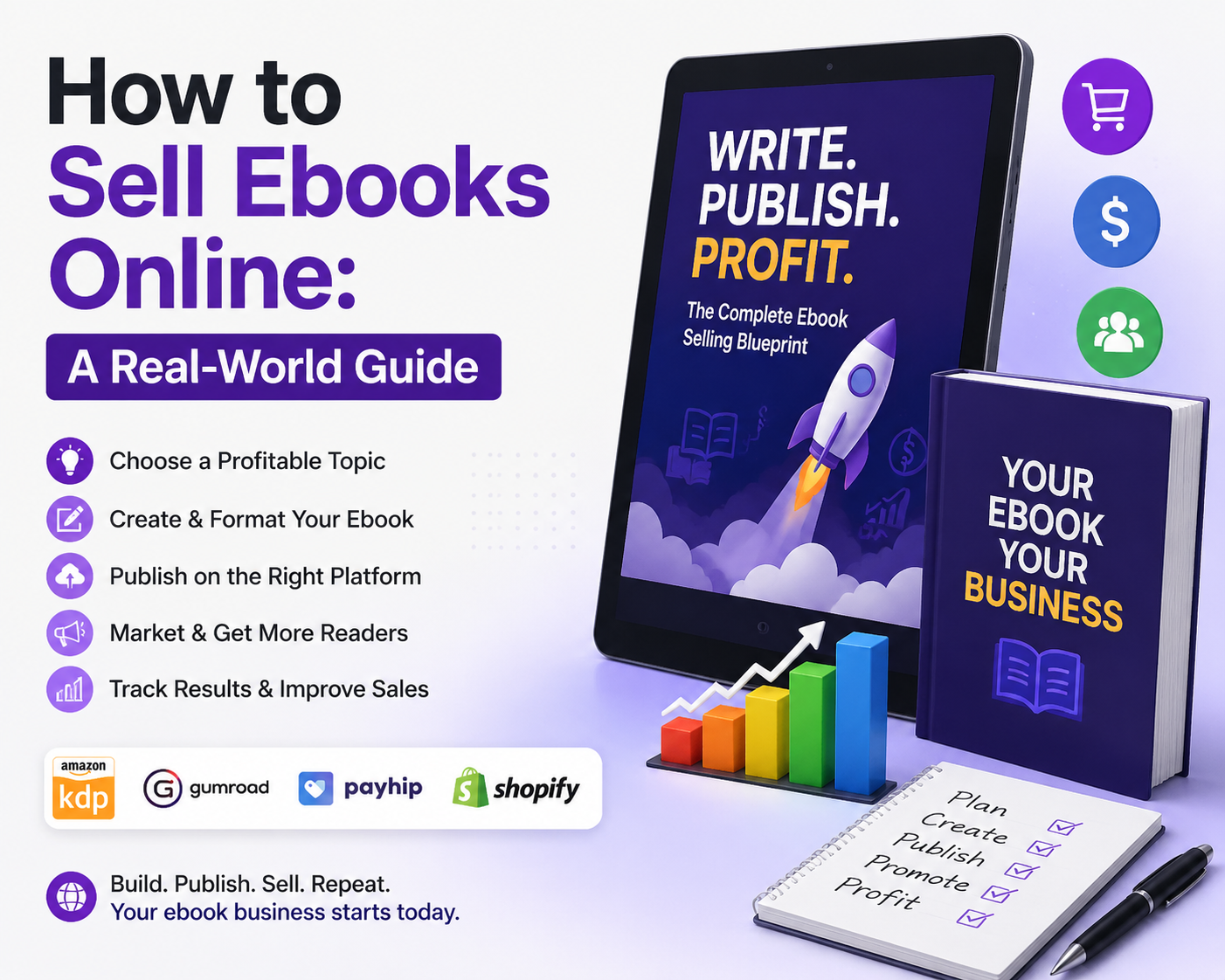
The first step is to confirm that you own the content or have permission to sell it. After that, the ebook should be edited, proofread and formatted properly. You then need to decide whether you want to sell through a marketplace such as Amazon or use a direct-selling platform such as Payhip, Gumroad or Shopify. Once the platform has been selected, you should create the ebook listing or product page, set the price, choose how customers will pay and configure digital delivery. It is also important to consider any relevant UK consumer and tax requirements before launching. The entire purchase process should be tested to make sure that payments, confirmation emails and file delivery are working correctly. The final step is to publish the ebook and promote it to your target audience.
1. Check Your Rights and Prepare the Ebook
Before selling an ebook, you must make sure that you have the right to sell the content. If you wrote the ebook yourself, copyright protection will normally arise automatically in the UK. However, purchasing somebody else’s ebook does not usually give you permission to reproduce it or resell copies. If you are using licensed material, you should carefully check the licence terms. Terms such as Resell Rights, Master Resell Rights and Private Label Rights may describe different permissions, but the name of the licence alone does not determine what you are legally allowed to do. You should check whether the licence permits commercial resale, editing, rebranding, marketplace sales and the transfer of resale rights. Any territory, attribution or pricing restrictions should also be reviewed. If ownership or permission is unclear, professional intellectual property advice may be appropriate.
Should You Sell an Ebook as PDF or EPUB?
The best file format depends on the type of ebook you are selling and the platform you plan to use. PDF is particularly useful for workbooks, reports, templates, checklists and visual guides because it keeps the original layout intact. EPUB is more suitable for reading-focused ebooks because the text can adjust to different screen sizes and reader settings. Google Play Books supports both PDF and EPUB, while Apple Books focuses mainly on EPUB publishing. Direct-download platforms can be especially useful for selling PDF guides and resources. Regardless of which format you choose, the finished ebook should be tested on both mobile and desktop devices. Links, images, navigation, page layout and overall readability should all be checked before the ebook is made available for sale.
2. Choose the Right Platform to Sell Your Ebook
There is no single platform that is best for every ebook seller. The right choice depends on whether you need marketplace discovery, simple direct sales or a complete ecommerce store. Amazon KDP is suitable for authors who want access to Kindle readers and an established marketplace. Payhip is designed for direct digital sales and offers different plans with varying transaction fees and monthly charges. Gumroad is another option for creator-led digital sales and offers both direct sales and marketplace-style discovery. Shopify is generally more suitable for larger ecommerce businesses or sellers who want the ebook to be part of a wider product range. Apple Books, Kobo and Google Play Books are also available for broader ebook distribution. Since platform fees, royalties and terms can change, current information should always be checked before selecting a service.
Amazon KDP vs Payhip vs Gumroad vs Shopify
Amazon KDP may be the better option if marketplace visibility is important because customers already use Amazon to search for books. Payhip or Gumroad may make more sense if you already have an audience and want a simple method of selling PDFs or other digital products directly. Shopify provides greater control over the ecommerce experience, but it is generally more appropriate when the ebook is part of a larger business or online store. Sellers should not compare platforms based on transaction fees alone. Supported file formats, marketplace discovery, payment-processing charges, customer access, tax handling, digital delivery, refunds, payouts and the amount of traffic you need to generate yourself should also be considered.
Should You Use Amazon KDP Select?
KDP Select is an optional Amazon programme. When an ebook is enrolled in KDP Select, Amazon requires the digital edition to remain exclusive to KDP during the relevant enrolment period. Physical versions can still be distributed elsewhere. In exchange, authors gain access to benefits such as Kindle Unlimited. KDP Select may therefore be useful for authors who want to concentrate mainly on Amazon and Kindle. However, it is less suitable if you want to sell the same digital ebook at the same time through your own website, Apple Books, Kobo or other digital retailers.
3. Create a Product Page That Helps People Decide
A strong product page should make it easy for potential buyers to understand whether the ebook is right for them. It should clearly explain who the ebook is designed for, what problem it solves and what the buyer will receive. The page should include the cover, a clear description, the main benefit or intended outcome, important chapters or resources, the file format, price and delivery information. Where appropriate, you may also provide a preview or sample and genuine reviews or credentials. Vague claims such as describing an ebook as the “ultimate guide” should be avoided unless you explain what makes it useful. Marketplace sellers should also pay attention to metadata. Accurate titles, subtitles, descriptions, categories and keywords can help retailers understand the ebook and improve its visibility in relevant searches.
4. Set Up Payment and Digital Delivery
Payment and delivery should be tested before the ebook is launched. Where possible, complete a test purchase and confirm that payment can be processed successfully, the confirmation email arrives, the correct ebook is delivered and the download link works. The process should also function properly on mobile devices and customers should have a way to contact you if something goes wrong. Marketplaces such as Amazon generally control more of the checkout, payment and ebook-delivery process. Direct selling gives sellers greater control over the customer journey but may also create greater responsibility for setup, support and compliance.
5. Understand the Main UK Legal and Tax Rules
Selling ebooks in the UK involves legal and tax considerations. Some platforms may handle certain digital VAT obligations or operate as merchants of record, taking responsibility for particular buyer-side payment and tax obligations. However, this does not automatically remove the seller’s responsibility for tax on the income they earn. Sellers should therefore understand exactly what their chosen platform handles and what remains their own responsibility.
UK Consumer Rules for Digital Content
Downloaded ebooks are considered digital content and UK consumer rules may apply. Where digital content is supplied before the normal cancellation period has expired, the applicable rules generally require the customer’s express consent for supply to begin and acknowledgement of the circumstances in which the cancellation right may be lost once supply starts. This is separate from a customer’s rights where the digital content is faulty. The checkout process, refund policy and customer-support procedures should therefore reflect the relevant consumer protections.
VAT on Ebooks
Qualifying electronic publications may be zero-rated for UK VAT, although zero-rated does not mean VAT-exempt. HMRC rules cover qualifying electronic books and some other electronic publications, while certain products dominated by advertising, audio or video may be excluded. VAT registration is a separate matter. The article notes a compulsory UK VAT registration threshold of £90,000 of taxable turnover, although the correct treatment depends on the seller’s circumstances and current HMRC rules. International sales can also create additional tax issues depending on the buyer’s location and how the platform processes the transaction. Professional tax advice may be needed where sales become substantial or the VAT position is unclear.
Income From Ebook Sales
Income from ebook sales may also have income-tax implications. If your activity amounts to trading, profits may need to be considered for UK income-tax purposes. The UK also has a £1,000 trading allowance, although whether it applies will depend on the seller’s individual circumstances. Sellers should keep proper records of sales, refunds, platform fees, payment-processing charges and relevant business expenses. A platform collecting VAT or sales tax does not automatically remove the seller’s responsibility to consider tax on the income they earn.
6. How Much Should You Charge for an Ebook?
There is no single best price for an ebook. The amount you charge should reflect the problem the ebook solves, the intended customer, competing products, the depth and usefulness of the content and whether it includes specialist information, templates or additional resources. Platform fees, payment-processing fees and any ongoing support or updates should also be considered. A general-interest ebook may sell for significantly less than a specialist professional guide. Page count alone is not a reliable pricing method because the value of the content to the intended customer is usually more important. Sellers should also consider the total cost of using each platform, rather than looking at transaction fees alone.
7. Launch and Promote Your Ebook
Your marketing approach should match the way you sell the ebook. If you sell directly, you will largely be responsible for generating your own traffic. This may involve SEO content, an existing email list, LinkedIn, relevant social media platforms or video content. If you sell through a marketplace, discoverability can be improved through accurate categories and keywords, a strong description, a professional cover, appropriate pricing and genuine reviews. External promotion can still be useful even when marketplace traffic is available. Instead of focusing only on clicks and website visitors, sellers should also track sales and conversion rates. The aim is to attract people who are genuinely interested in the problem the ebook solves.
Email Marketing Rules
Email marketing should also be handled carefully. A customer making a purchase does not automatically give unlimited permission to send promotional emails. UK electronic marketing rules generally require consent unless an applicable exception, such as the soft opt-in, applies and all of its conditions are met. Sellers who want to build an email list should therefore make sure that their marketing activities comply with the relevant rules.
Before Your First Ebook Sale
Before launching, make sure that you have the right to publish or sell the content and that the ebook and cover are complete. The file should work correctly on the intended devices, your platform and payment settings should be properly configured and your product page should accurately explain what the buyer will receive. Payment and digital delivery should be tested, relevant consumer and tax requirements should be considered and there should be a realistic plan for attracting potential buyers.
Frequently Asked Questions
Is It Legal to Sell PDFs Online in the UK?
Yes. You can sell PDFs and other digital products online in the UK as long as you have the necessary rights to the content and comply with the legal requirements that apply to the sale.
Do I Need an ISBN for an Ebook?
Not always. Amazon KDP, for example, does not require an ISBN for a Kindle ebook. However, each retailer or distributor may have different requirements, so their individual rules should always be checked.
Can I Sell the Same Ebook on Amazon and My Own Website?
Usually, yes, provided that you own the necessary rights and have not agreed to an exclusivity arrangement. If your ebook is enrolled in KDP Select, Amazon’s digital exclusivity requirements apply during the enrolment period.
Do I Need a Website to Sell Ebooks?
No. Platforms such as Amazon KDP, Apple Books, Kobo, Google Play Books and hosted digital-product platforms can allow you to sell ebooks without operating your own website. However, having your own website can be useful if you want greater control over your branding, search traffic, customer journey and related products.
Conclusion
The best way to sell ebooks online in the UK depends largely on how customers are likely to discover you and how much control you want over the sale. Sellers who need marketplace discovery may prefer established retailers such as Amazon. Those who already have an audience and want to sell PDFs directly may find Payhip or Gumroad easier, while Shopify may be more suitable when the ebook forms part of a larger ecommerce business. Whichever route you choose, make sure that your publishing rights are confirmed, the correct file format is used, the total cost of selling is understood and the full purchase and delivery process is tested before launch. You should also ensure that the main UK legal and tax requirements relevant to your situation have been considered.

Muqit is an author at Insiders Desk, creating simple and practical guides to online business and digital income. He writes about business models, digital tools, SEO, content creation, and monetization methods, with a focus on clear explanations, realistic expectations, and informed decision-making. His content is educational and does not promise guaranteed income or business results.